Winter Running Outfits That Make Cold Mornings Look Chic
Choose your base, adjust your layers, and bring seasonal color to your next cold morning run.
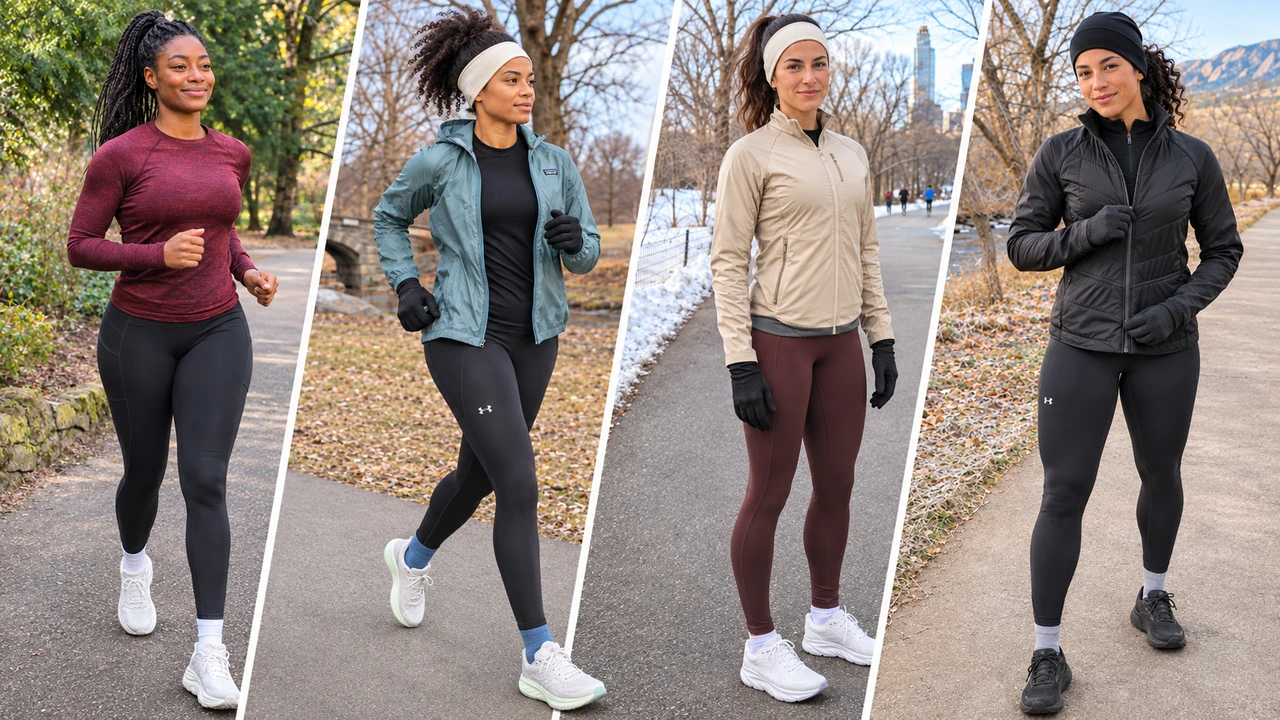
Getting dressed for a winter run involves a small negotiation: you want warmth at the front door and room to cool down once you get moving. These winter running outfits show how to build that balance with real technical pieces, comfortable proportions, and colors that feel right for the season.
Start with the forecast and the kind of run you have planned. A sheltered park loop at an easy pace needs a different setup from a windy riverside route. The temperature ranges below are editorial starting points for continuous running, not manufacturer ratings or guarantees. Wind, rain, effort, duration, and your own comfort can change the layers you need.
- Choose the layer against your skin. Wear a running sports bra that fits you comfortably, then add a synthetic or merino running top that moves sweat away from your skin. Keep the fit smooth enough to sit beneath a jacket without pulling across your shoulders.
- Adjust warmth before adding bulk. Use regular running tights for milder conditions and thermal tights when you need more insulation. A half-zip gives you another way to release heat. REI’s cold-weather running advice explains the layering basics; our guide to how to layer winter outfits applies the same idea to everyday dressing.
- Choose your outer layer for the weather. Add a light windbreaker for a breezy route, or a running jacket with insulation for colder conditions. A water-repellent windbreaker is different from a waterproof rain shell. Brooks’ cold-weather clothing guide is useful when comparing those needs.
- Finish at your hands, ears, and ankles. Add gloves and a headband or beanie when conditions call for them, and overlap socks with tights in colder weather. Use running shoes suited to your feet and route. The road shoes below are for clear surfaces; ice or deep snow needs a different plan. For darkness, add reflective gear and a light rather than relying on a pale jacket alone.
Keep an extra dry layer ready for afterward. Start with a short loop so you can adjust your clothing, and head indoors when conditions make the route unsafe. For a slower outing, see our fall walking outfit ideas, where the clothing needs are different from a continuous run.
01. Start With Earth Red and Navy
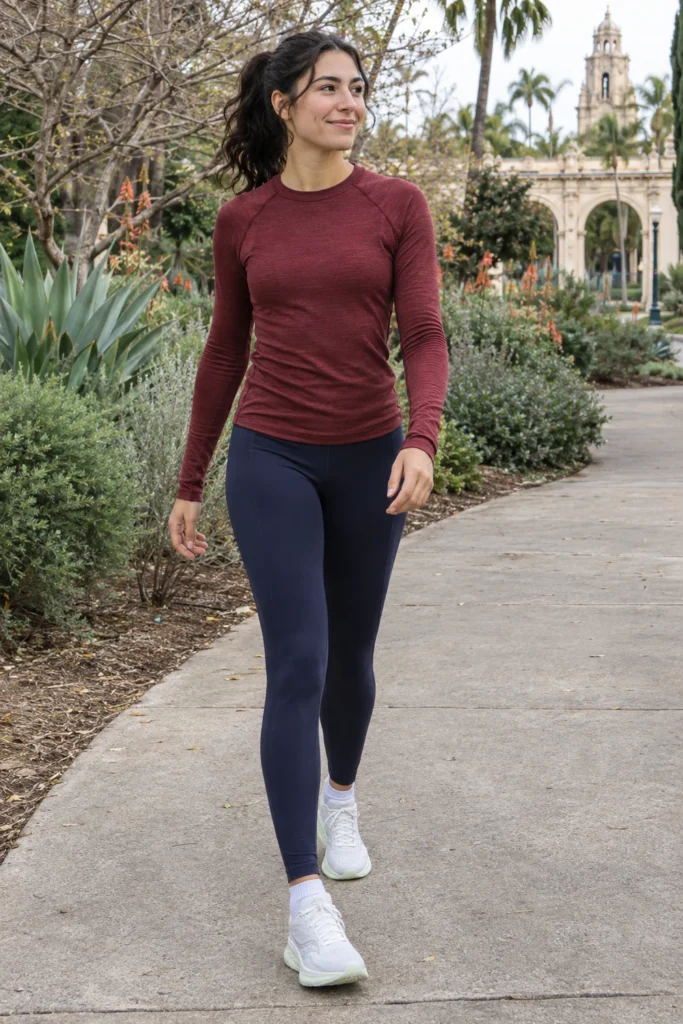
Temperature starting point: 48 to 55°F (9 to 13°C).
Pull on navy Tracksmith Turnover tights, then add the Earth Red Brighton Base Layer without tucking or bunching its hem. The deep red brings warmth to the palette, while pale green Saucony Ride 18 shoes keep the finish light. This is a simple starting formula for a mild, dry morning. Check that the top stays comfortably in place when you lift your arms, and keep a jacket nearby for your cooldown.
Reference piece: Tracksmith Brighton Base Layer in Earth Red.
02. Pair Burgundy With Lightweight Black Tights
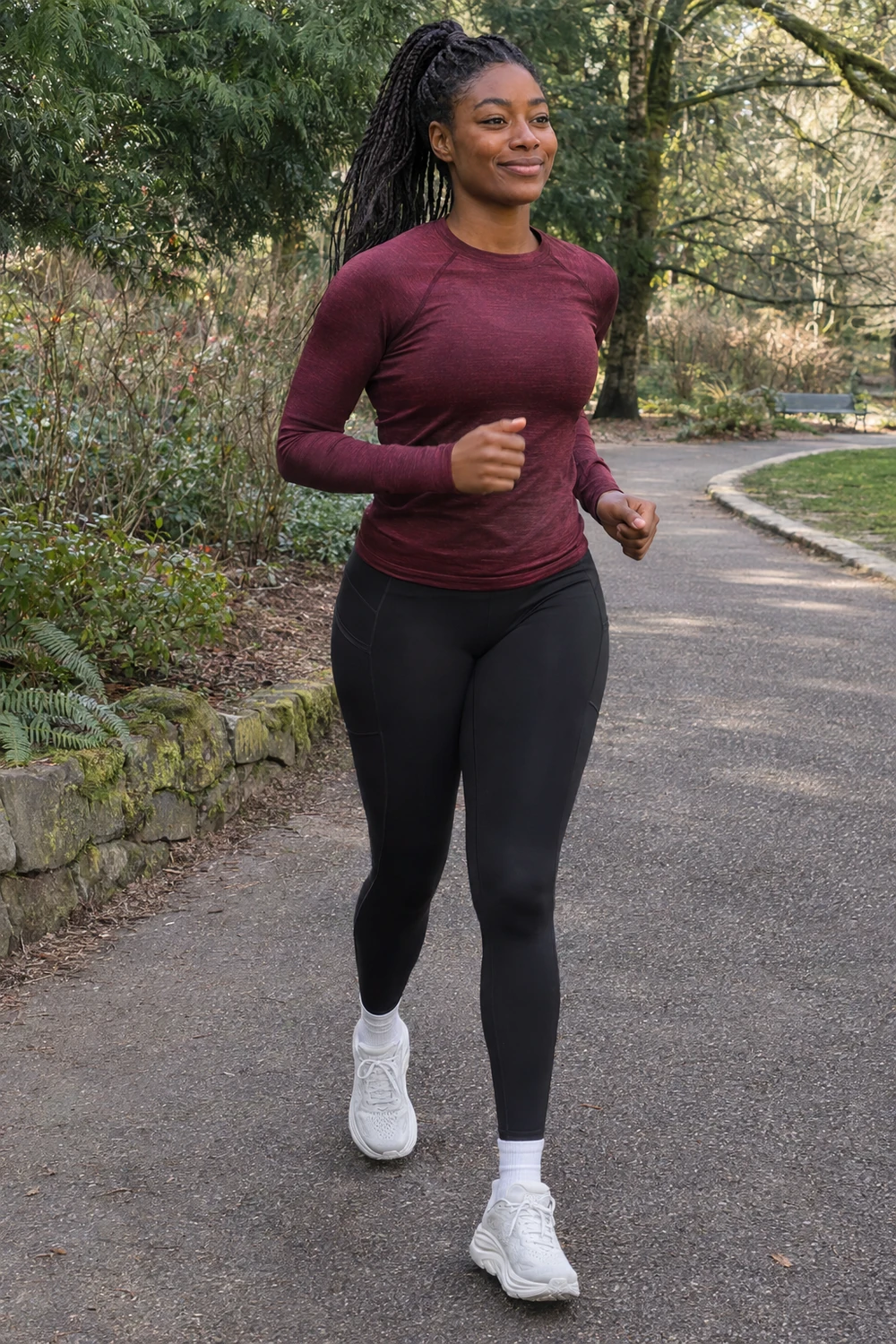
Temperature starting point: 45 to 52°F (7 to 11°C).
For a slightly softer color contrast, start with black lululemon Fast and Free tights and a burgundy ASICS ROAD SEAMLESS long-sleeve top. White HOKA Clifton 10 shoes and white crew socks draw a clean line at the ankle. Let the shirt skim the waistband so you can move freely. These are lightweight running tights, so choose a warmer pair if your legs feel cold rather than assuming every black legging provides the same insulation.
Reference piece: ASICS ROAD SEAMLESS LONG SLEEVE TOP in Dark Currant/Port Royal.
03. Build a Simple Black Base
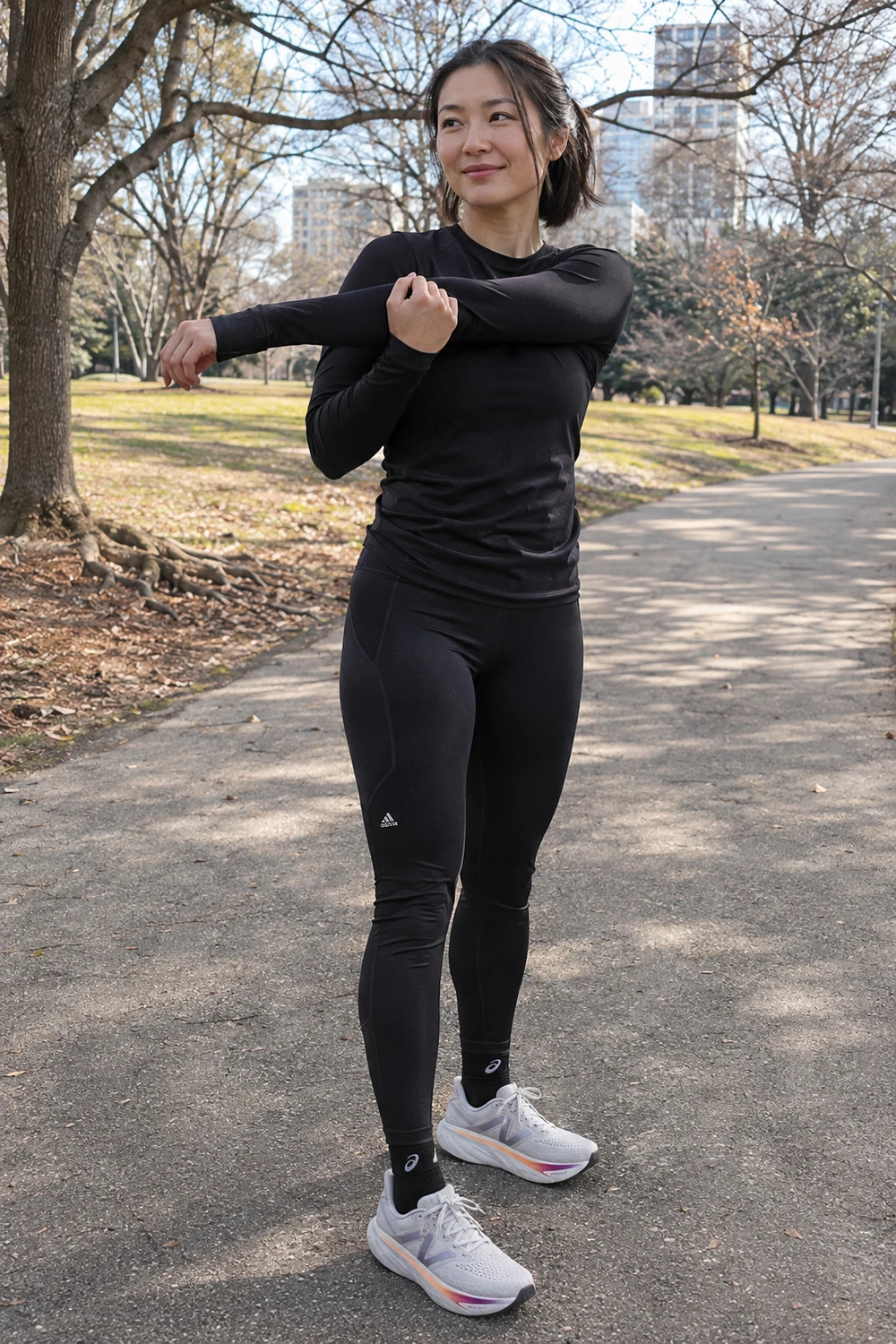
Temperature starting point: 45 to 50°F (7 to 10°C).
Build this look from a black It’s Rulu Classic-Fit shirt and adidas Own the Run leggings, then add gray New Balance 1080v14 shoes. Mixing a soft-looking top with a smooth fitted bottom gives the outfit some texture without adding extra layers. Pull the black socks above the tight hems if you prefer covered ankles. Keep this combination for a mild, sheltered run, and check the forecast before deciding to leave your shell at home.
Reference piece: lululemon It’s Rulu Classic-Fit Long-Sleeve Shirt in Black.
04. Use a Half-Zip to Release Heat
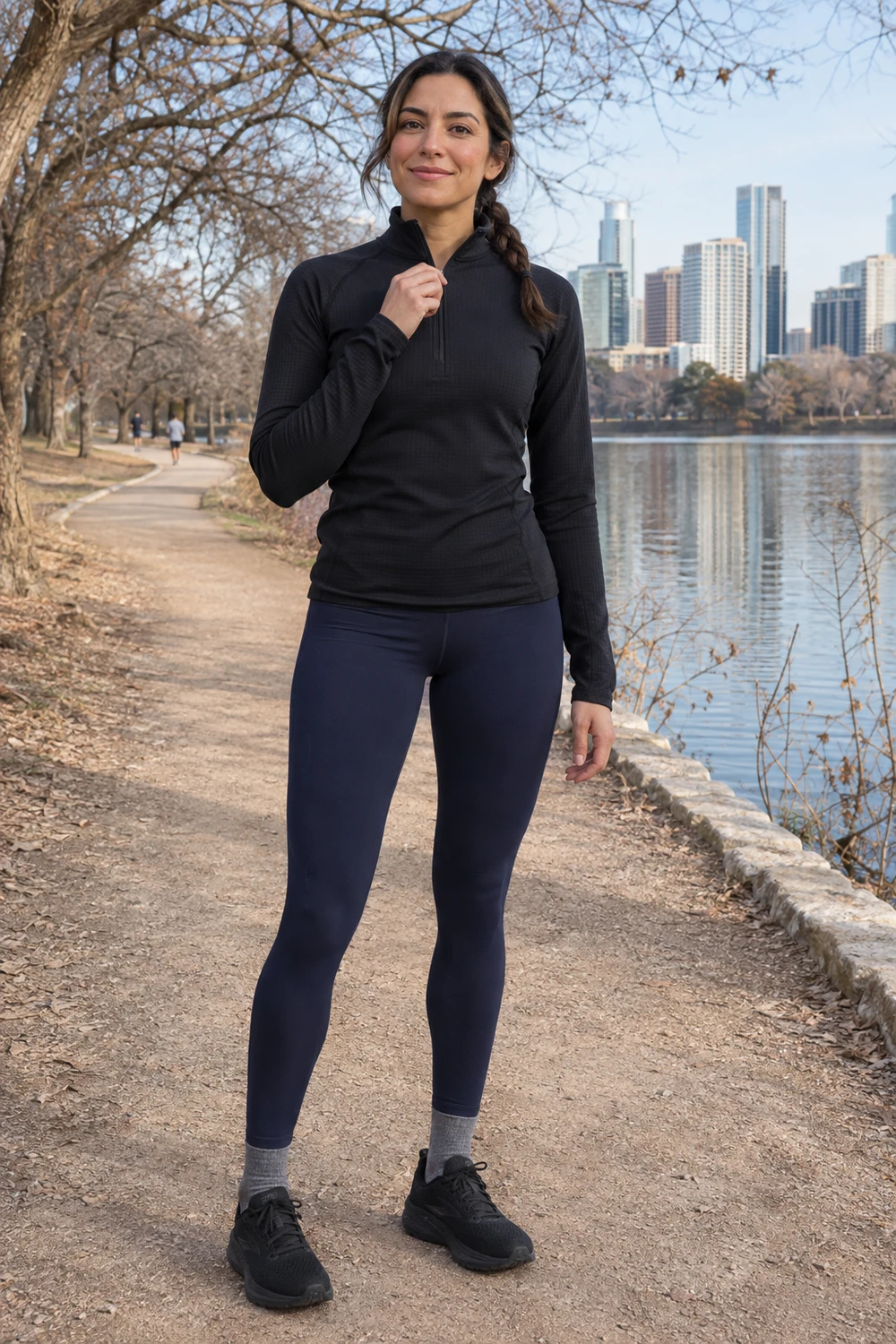
Temperature starting point: 42 to 48°F (6 to 9°C).
A black New Balance RC Essential Heat Grid half-zip makes it easy to fine-tune coverage as you warm up. Pair it with navy Turnover tights and black Brooks Ghost 17 shoes for a subtle change from head-to-toe black. Start with the zipper comfortably raised, then lower it if you feel too warm. Ash-gray socks soften the transition to the shoes; smooth their cuffs so they don’t gather beneath the tight hems.
Reference piece: New Balance RC Essential Heat Grid 1/2 Zip in Black.
05. Balance a White Thermal With Dark Legs
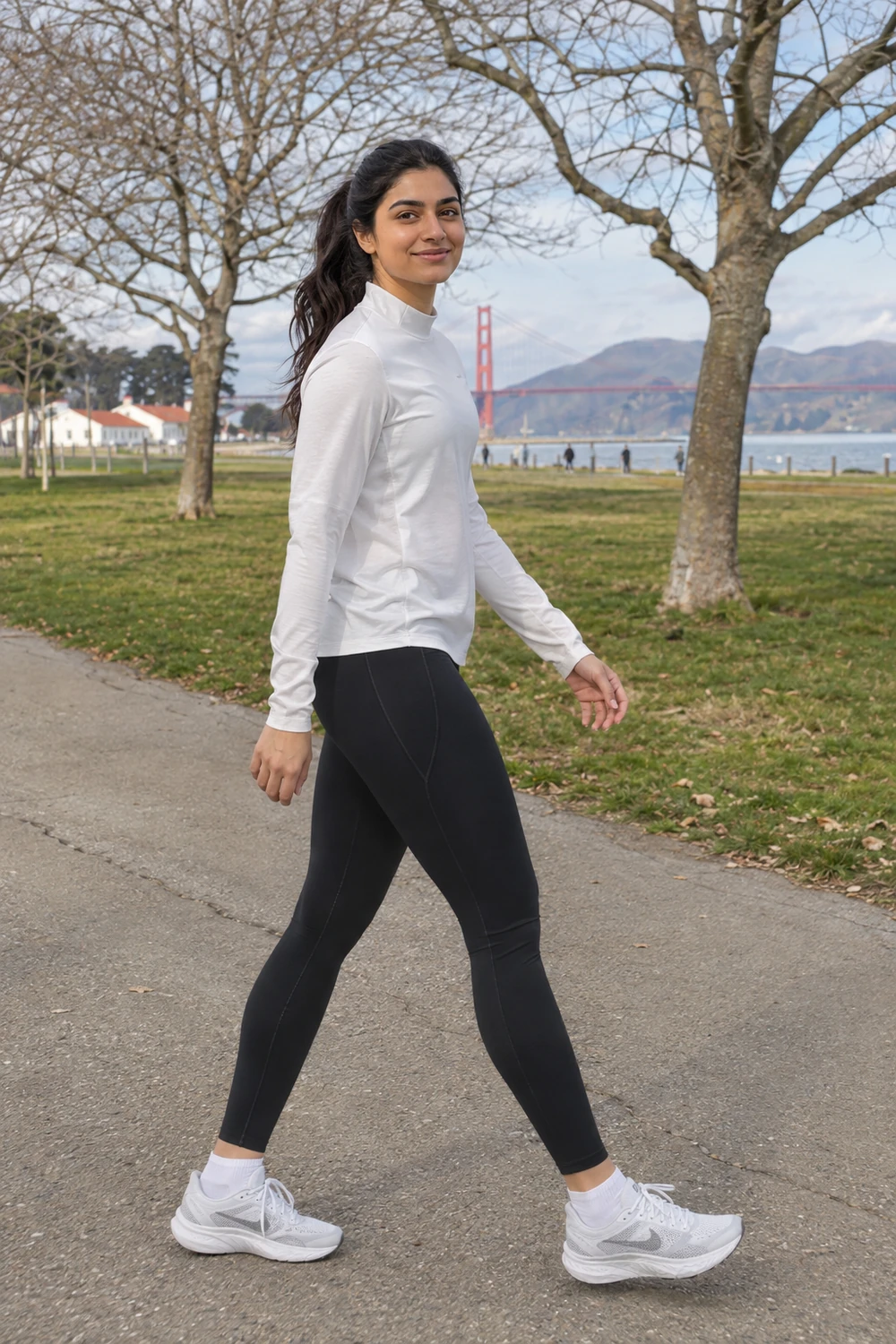
Temperature starting point: 42 to 48°F (6 to 9°C).
Use the white Brooks Notch Thermal top as the bright piece in an otherwise dark outfit. Its semi-fitted shape leaves a little room through the torso above black Fast and Free tights, while white and light-gray Nike Pegasus 41 shoes echo the top. Leave the hem loose and use the sleeves for comfortable wrist coverage. On an exposed waterfront route, add a wind layer if the breeze makes this two-piece formula feel too light.
Reference piece: Brooks Notch Thermal Long Sleeve 3.0 in White.
06. Add a Windbreaker Over Your Base
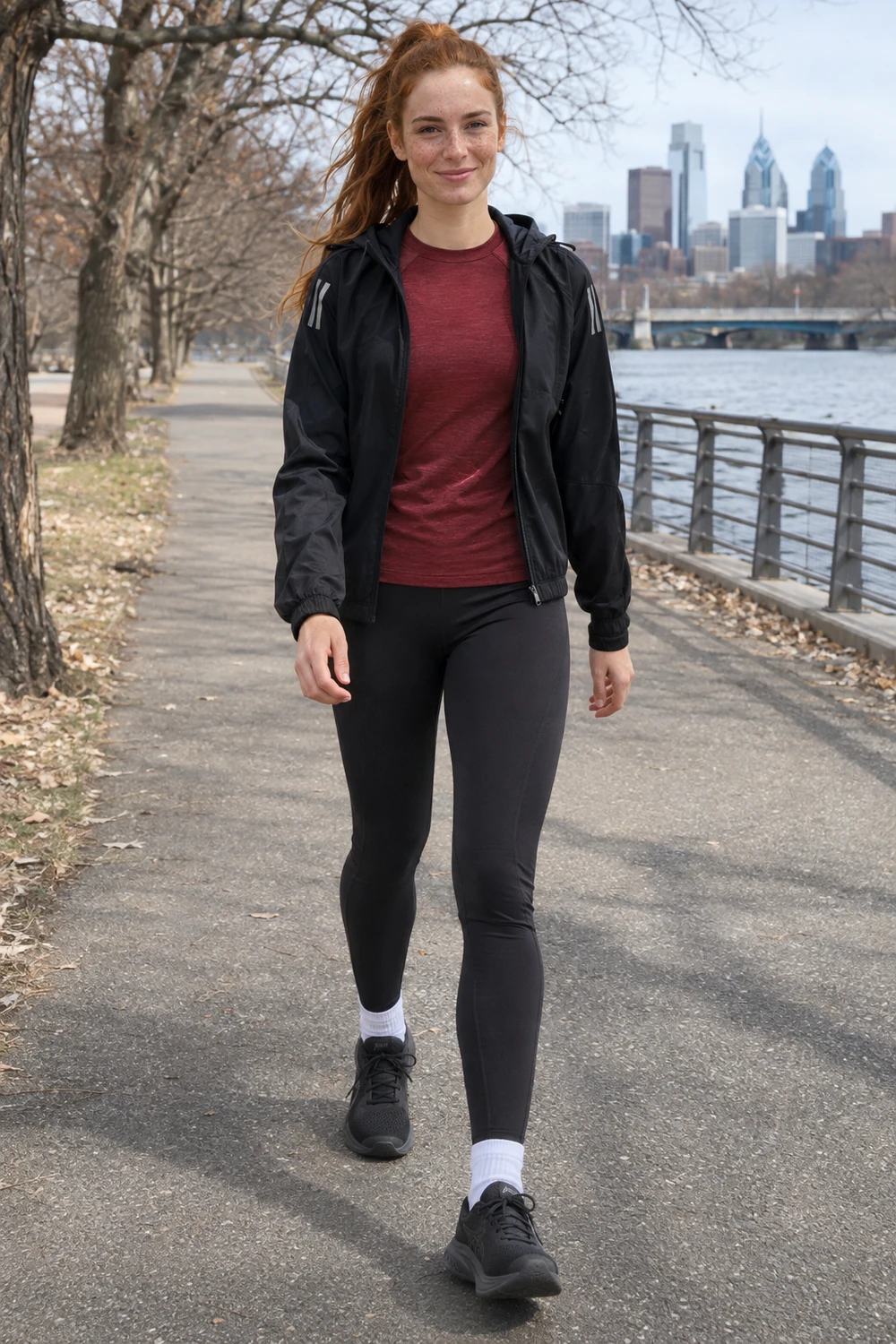
Temperature starting point: 40 to 47°F (4 to 8°C).
Put the Earth Red Brighton top on first, then layer the black adidas Own The Run jacket over it. Leave a little red visible at the zipper and finish with black leggings and Black/Concrete ASICS GEL-CUMULUS 27 shoes. Test a full arm swing before leaving so the shell doesn’t pull through the upper back. If rain is the main issue, check the jacket’s protection carefully; our rainy day outfit guide has ideas for dressing after the run, too.
Reference piece: Tracksmith Brighton Base Layer in Earth Red.
07. Layer Blue Sage for a Forest Loop
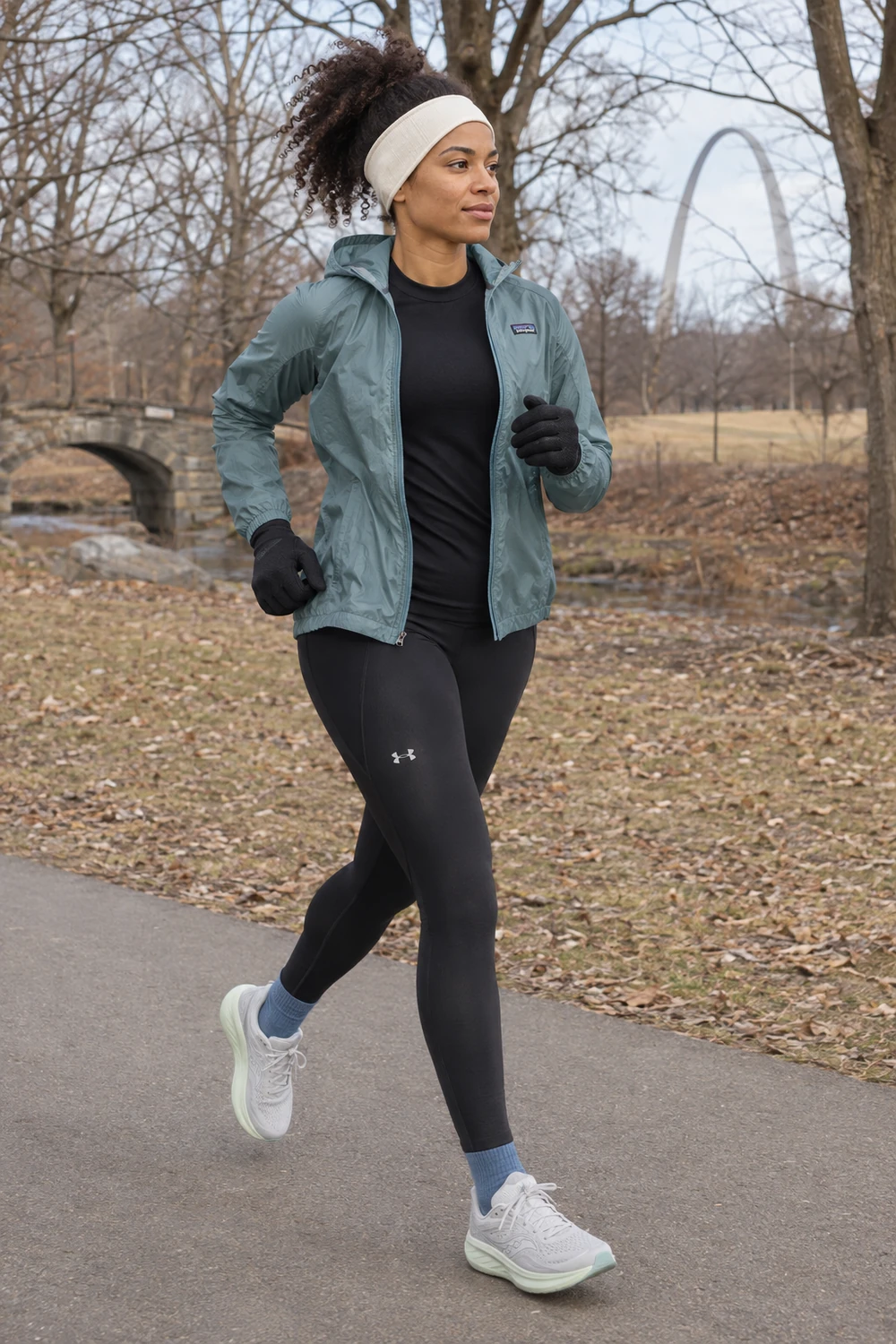
Temperature starting point: 38 to 45°F (3 to 7°C).
Add a Blue Sage Patagonia Houdini over a black Rulu shirt and black ColdGear leggings. The muted blue-green makes the upper half feel lighter, while the narrow black base keeps the combination simple. Finish with a bone-colored headband, black Dash gloves, and pale green-accented Saucony shoes. The Houdini is a thin wind layer, so keep the shirt underneath responsible for warmth. Adjust the opening when you heat up instead of waiting until your base is damp.
Reference piece: lululemon It’s Rulu Classic-Fit Long-Sleeve Shirt in Black.
08. Soften Cocoa Tights With White and Sage
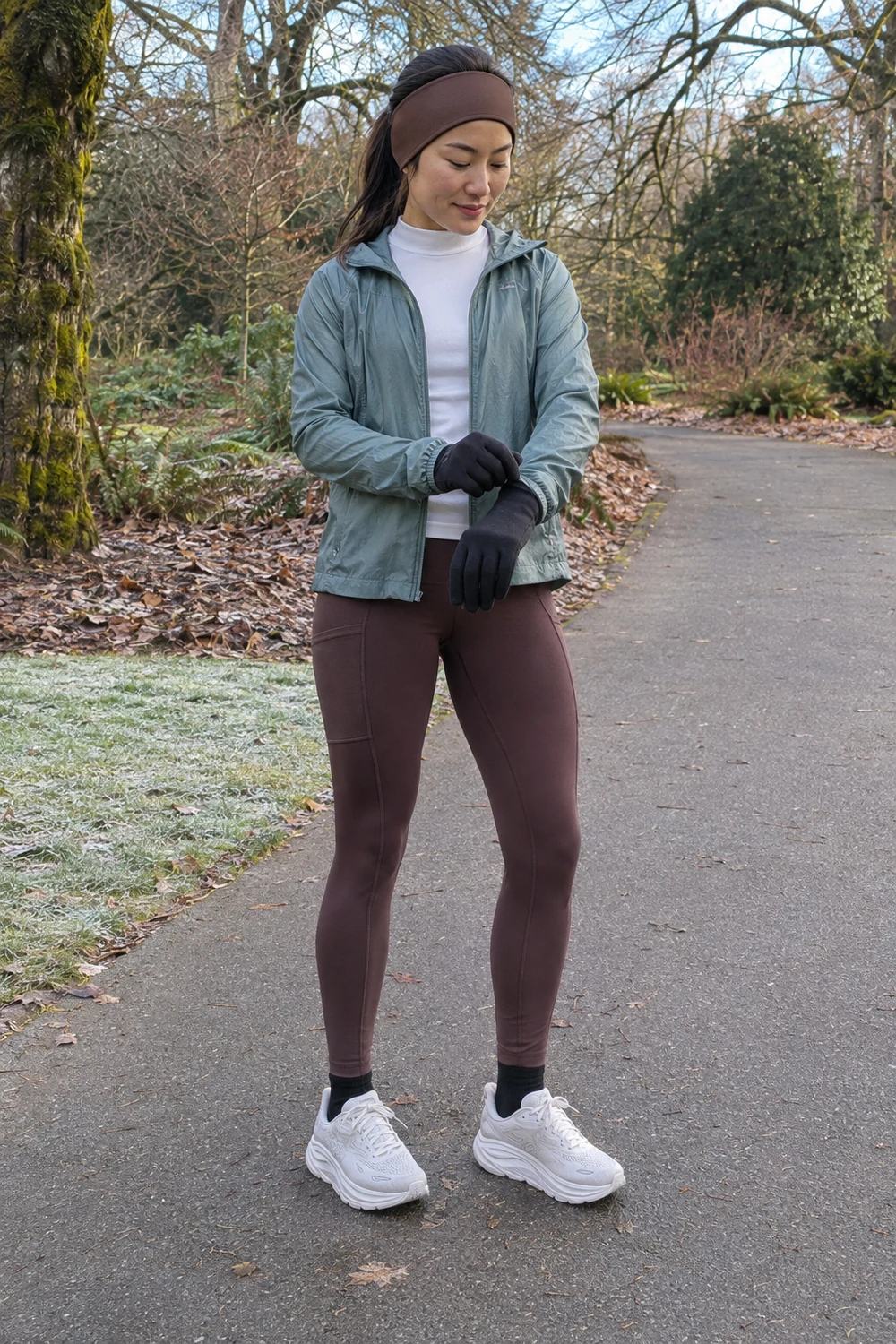
Temperature starting point: 36 to 43°F (2 to 6°C).
Start with Cocoa Brooks Momentum Thermal tights and the white Notch Thermal top, then add the Blue Sage Houdini. The brown-plum tights give the white and sage something deeper to sit against, and white HOKAs repeat the light tone at your feet. A cocoa headband makes the colors feel considered. Keep the jacket loose enough to fit the thermal sleeves comfortably, then check that the glove cuffs meet them without a tight ridge at your wrists.
Reference piece: Brooks Notch Thermal Long Sleeve 3.0 in White.
09. Keep Burgundy Visible Beneath a Shell
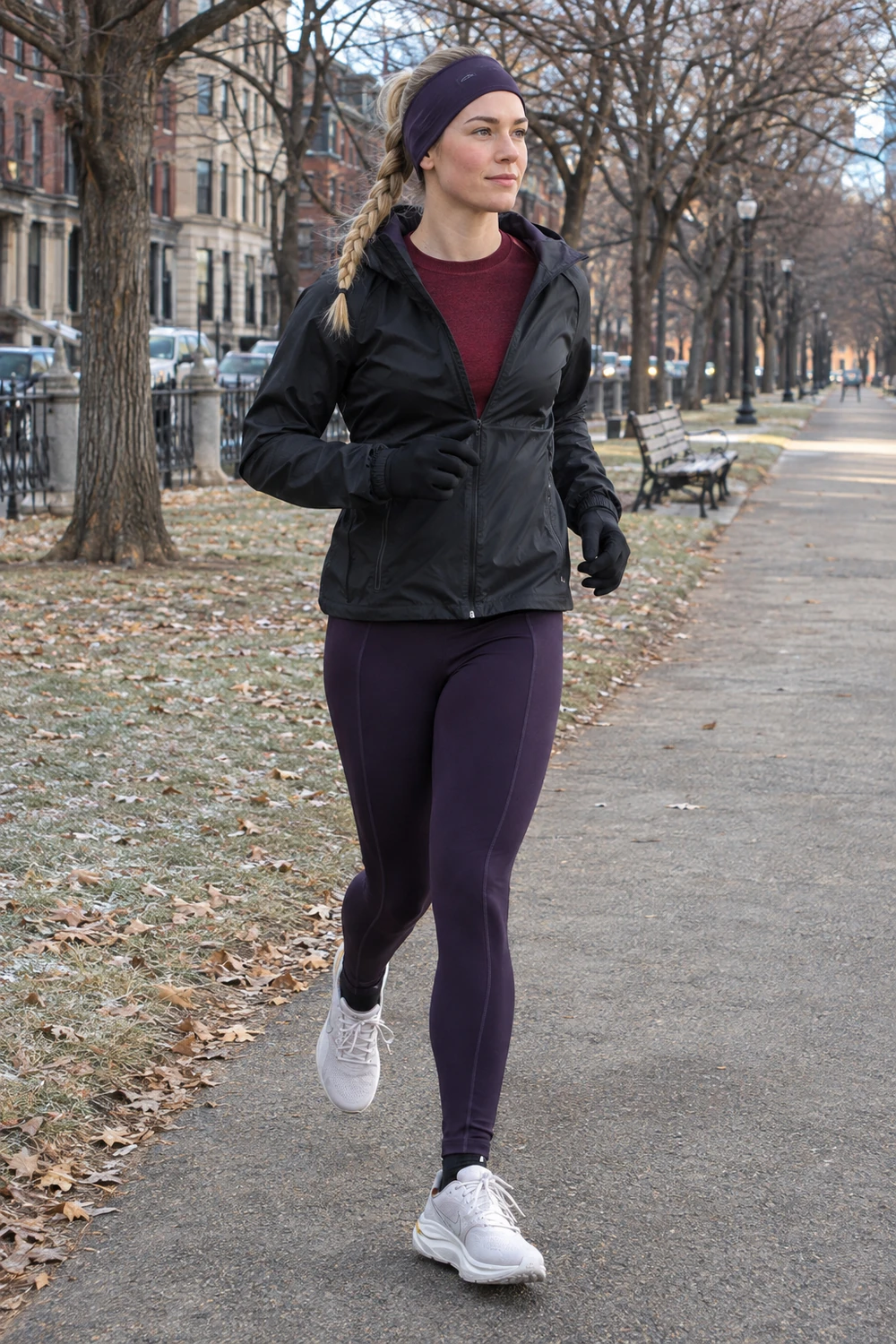
Temperature starting point: 36 to 43°F (2 to 6°C).
Let a burgundy ASICS crewneck show through the opening of a black adidas windbreaker, then pair it with Nightfall thermal tights. The dark purple reads as a restrained color choice beneath the black jacket, especially with pale Pegasus shoes. Add a matching headband and black Dash gloves before stepping out. Secure the jacket hem so it doesn’t flap, and keep the zipper within easy reach when your pace changes or the sheltered street opens onto a breezier stretch.
Reference piece: ASICS ROAD SEAMLESS LONG SLEEVE TOP in Dark Currant/Port Royal.
10. Switch to Light Insulation for Cold Miles
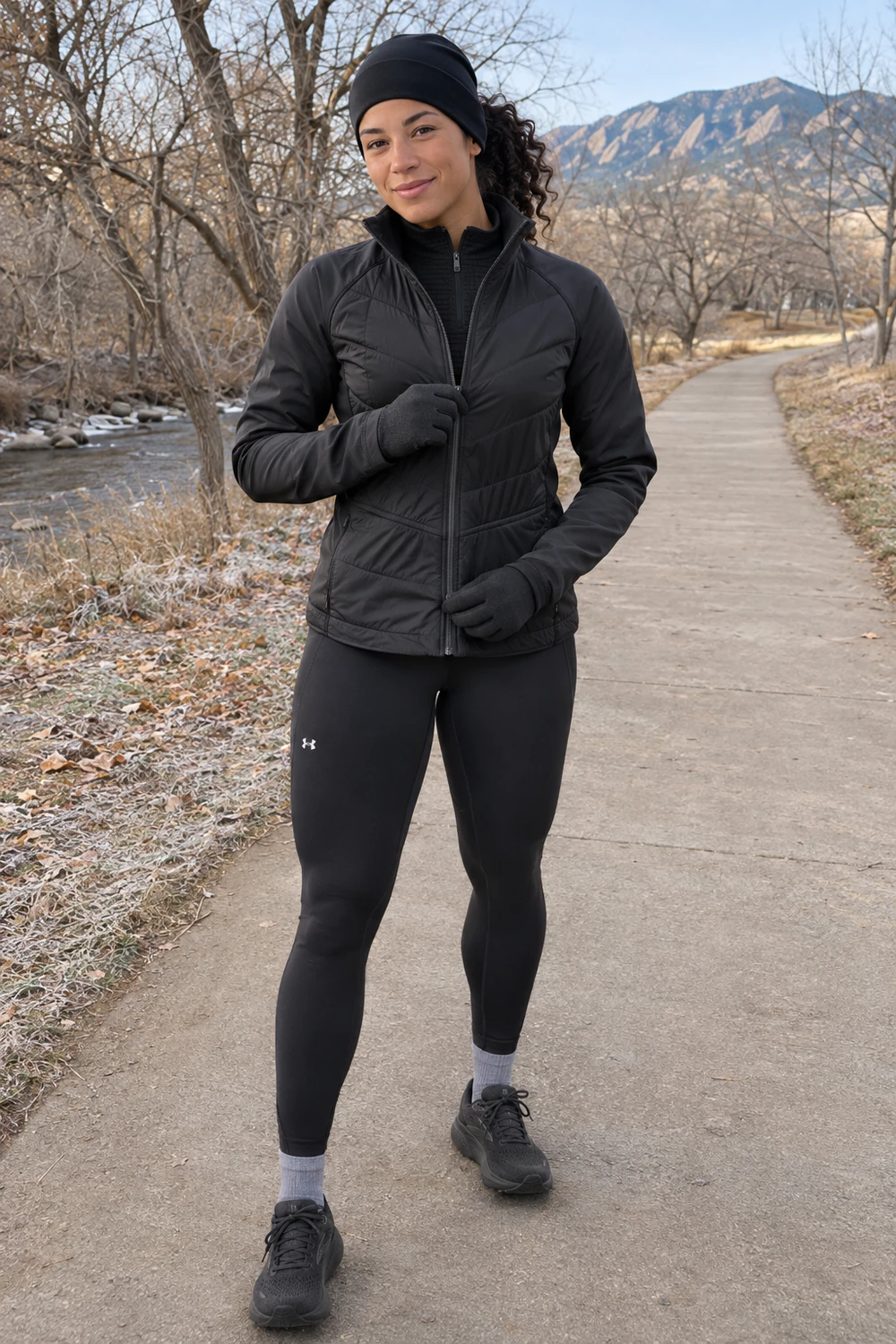
Temperature starting point: 32 to 40°F (0 to 4°C).
For colder mornings, put a black Heat Grid half-zip beneath the lightly insulated Nike Swift Therma-FIT jacket. Black ColdGear leggings and Ghost 17 shoes continue the dark line, while ash-gray socks break it up just enough. Add a close-fitting black thermal beanie and Storm Fleece gloves. Check that the two collars sit smoothly together, and lower one zipper before both layers begin to feel crowded around your neck. This is a daylight outfit unless you add visibility gear.
Reference piece: New Balance RC Essential Heat Grid 1/2 Zip in Black.
11. Give Cocoa Tights a Protective Top Layer
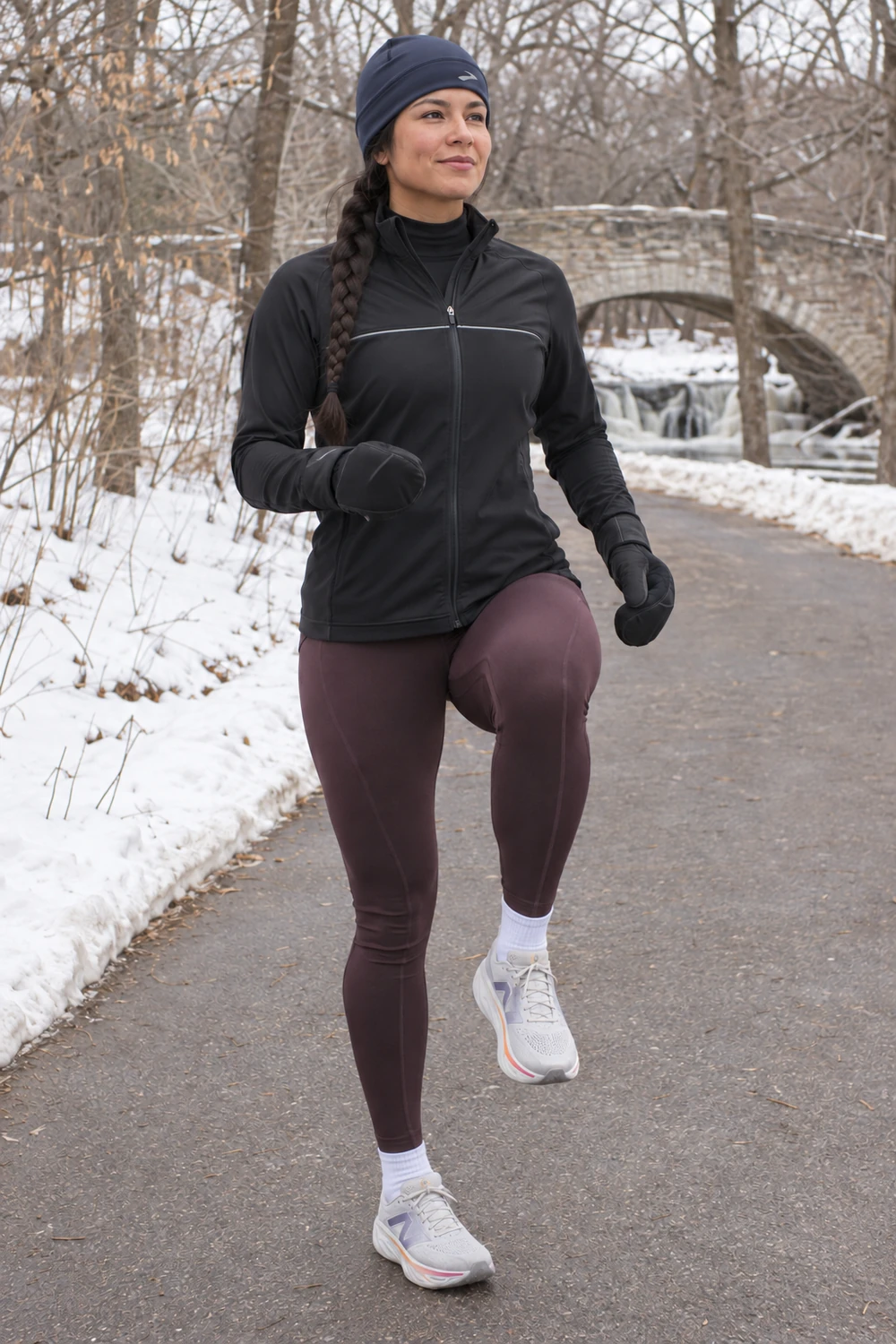
Temperature starting point: 30 to 38°F (-1 to 3°C).
Use a fitted black ColdGear mockneck under the ASICS ROAD WINTER RUN JACKET, leaving enough space for comfortable breathing and arm movement. Cocoa thermal tights make the combination warmer in color, with gray New Balance shoes and white crew socks at the bottom. Add an indigo beanie and black hybrid gloves. Before setting off, overlap the sleeves and glove cuffs, then take a few warm-up steps to check that the jacket hem stays clear of your stride.
Reference piece: Under Armour ColdGear Women’s Mock Neck Long Sleeve in Black/White 001.
12. Mix Cocoa and Plum Under Black Insulation
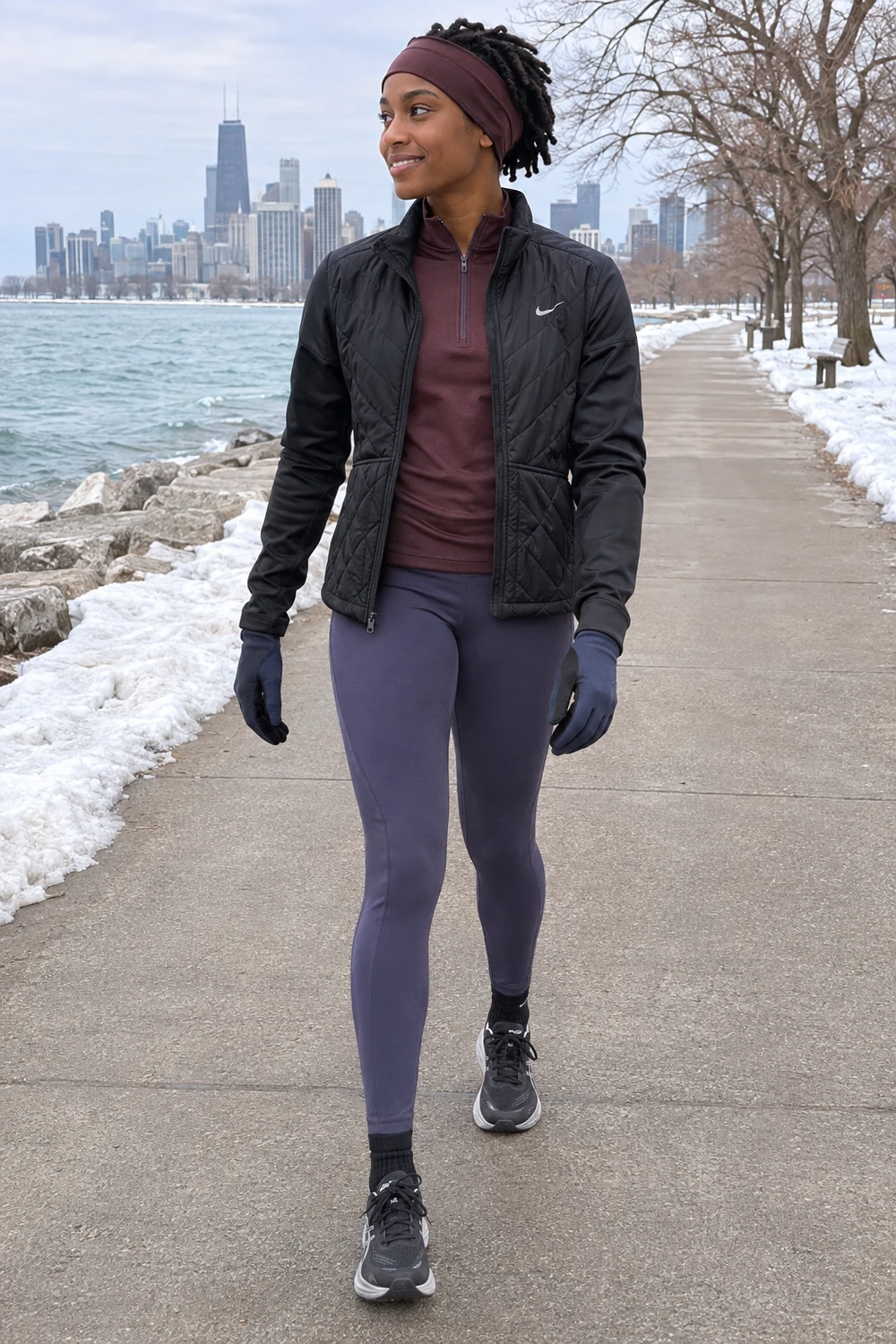
Temperature starting point: 30 to 38°F (-1 to 3°C).
Pair the Cocoa Momentum quarter-zip with Nightfall tights, then put the black Swift jacket over the top. The muted brown-plum and purple shades give this outfit depth even when only a little of the shirt shows. Black ASICS shoes keep the base quiet, and indigo hybrid gloves add a small color change. Keep one collar lower than the other for comfort, and use the jacket zipper first when you need to release a little heat.
Reference piece: Brooks Momentum Thermal 1/4 Zip in Cocoa 245.
13. Try Beige and Cocoa for Dry Cold
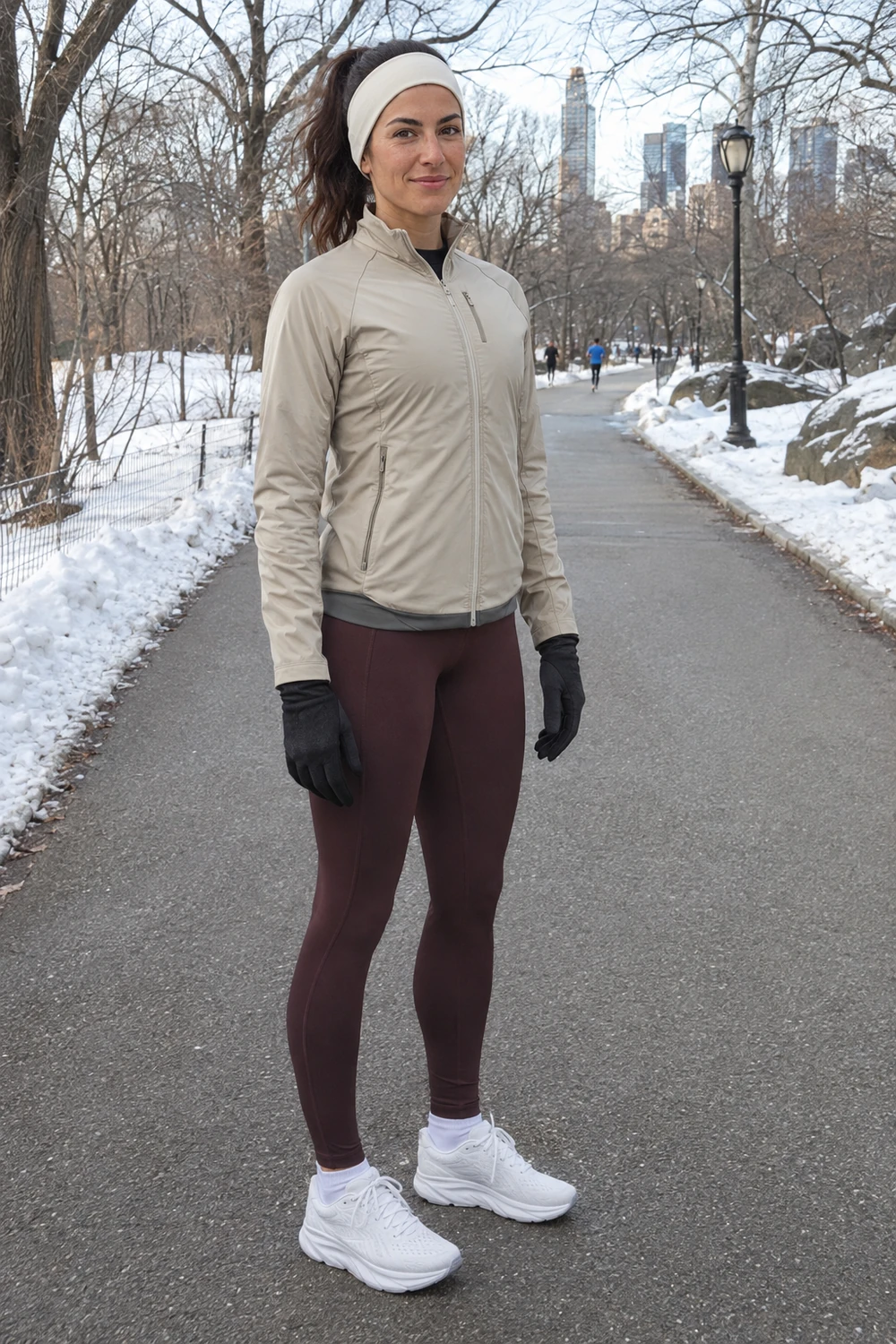
Temperature starting point: 28 to 36°F (-2 to 2°C).
Begin with a black Rulu shirt and Cocoa thermal tights, then add the Tech Beige GOREWEAR CONCURVE insulated jacket. The pale stand collar and smooth front give the practical layers a clean finish, especially with white HOKAs and a bone headband. Zip the jacket high enough for comfort while keeping the collar clear of your chin. If you want to carry the same dark-bottom, light-top idea into everyday clothes, try our fall leggings outfit guide.
Reference piece: lululemon It’s Rulu Classic-Fit Long-Sleeve Shirt in Black.
14. Warm Up Plum Tights With a Beige Jacket
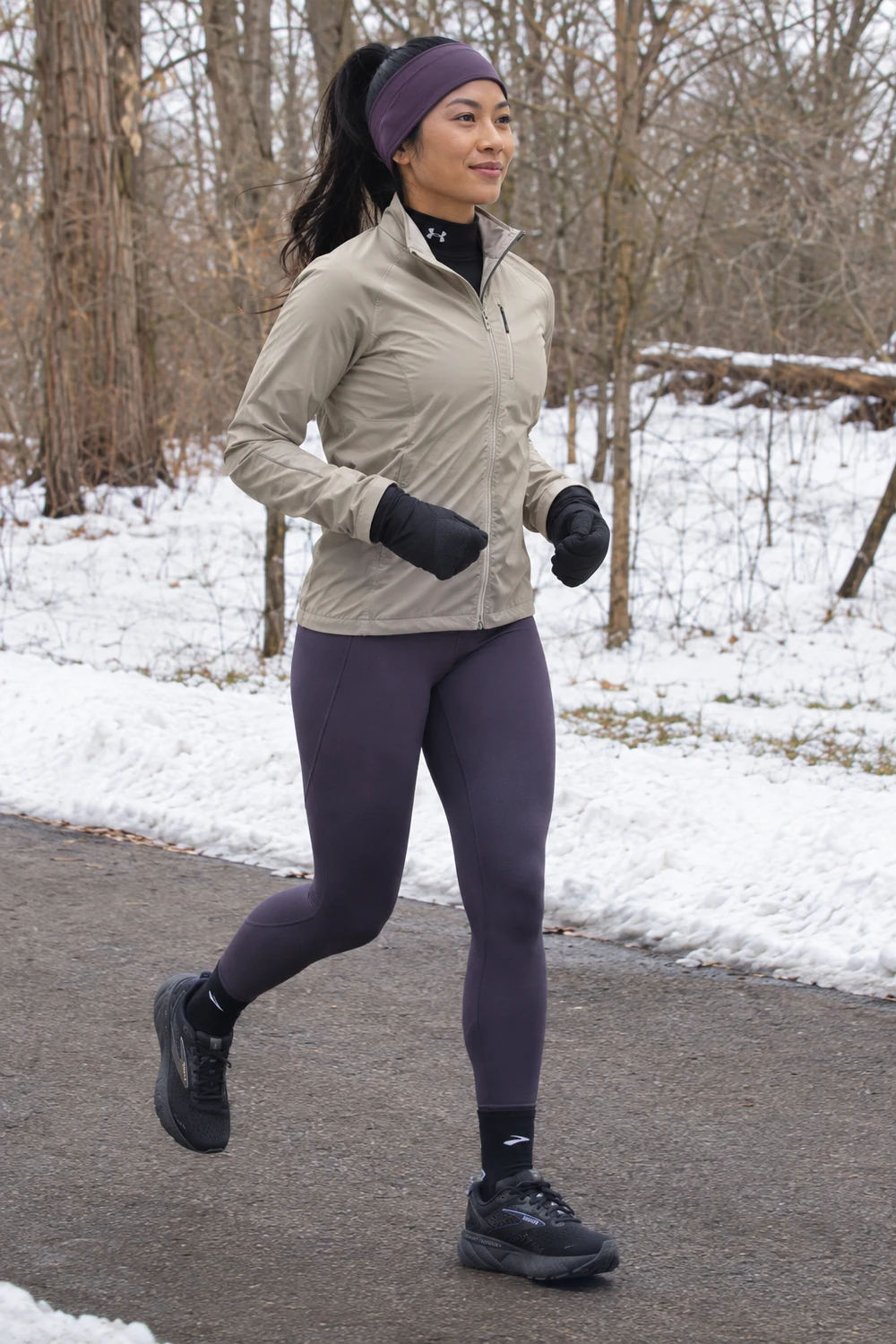
Temperature starting point: 28 to 36°F (-2 to 2°C).
Choose Nightfall thermal tights when you’d like more color beneath the beige CONCURVE jacket. A black ColdGear mockneck sits underneath, and black Ghost 17 shoes ground the softer jacket shade. Match the headband to the tights, then pull on the hybrid gloves with their mitten covers available for extra coverage. Keep the socks overlapping the hems. On a wooded route, inspect shaded patches before committing to your pace, even when the main path looks clear.
Reference piece: Under Armour ColdGear Women’s Mock Neck Long Sleeve in Black/White 001.
15. Cover the Gaps on a Frosty Morning
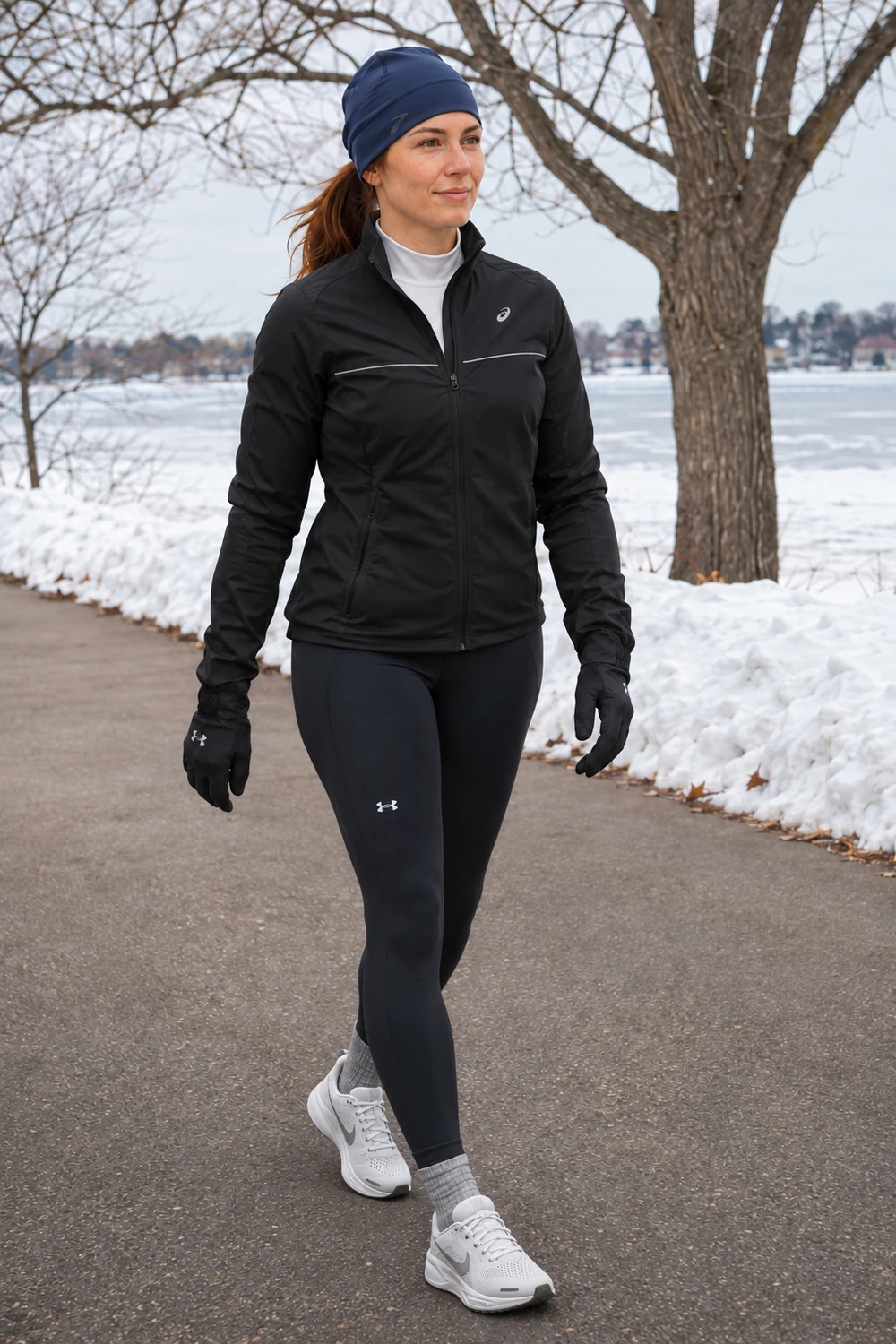
Temperature starting point: 28 to 36°F (-2 to 2°C).
Put on the white Notch Thermal top and black ColdGear leggings before adding the black ASICS winter jacket. A small area of white at the collar keeps the layers visually separate, and white-gray Pegasus shoes repeat that detail. Finish with an indigo beanie, ash-gray socks, and black Storm Fleece gloves. Cover the ankle gap fully, then check your wrists and ears. If this feels cold during an easy test loop, choose more insulation or move the run indoors.
Reference piece: Brooks Notch Thermal Long Sleeve 3.0 in White.
16. Choose Adjustable Layers for a Warming Forecast
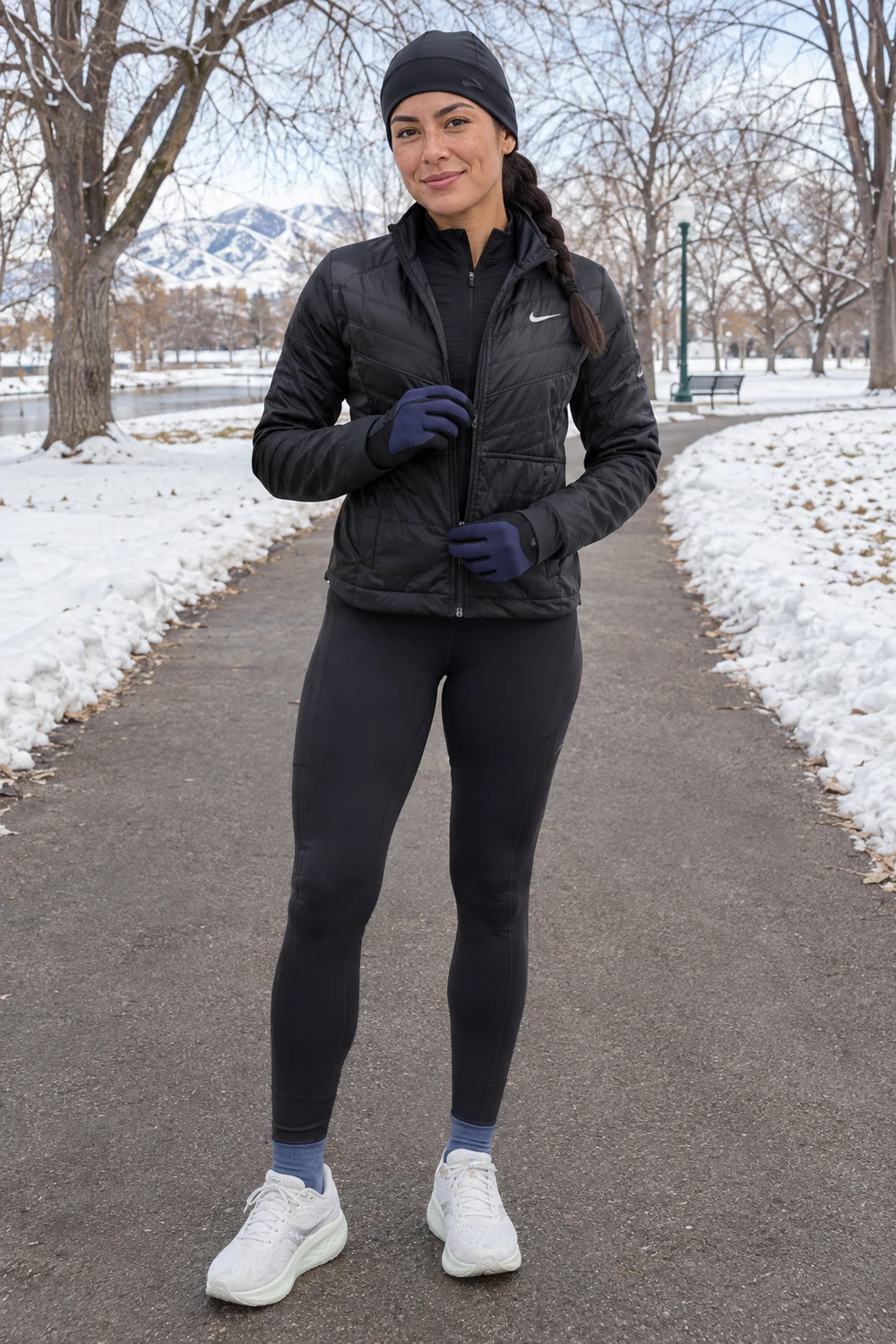
Temperature starting point: 35 to 42°F (2 to 6°C).
For a morning that should warm up, combine the black Heat Grid half-zip, Swift jacket, and Fast and Free tights. The two zippers let you change coverage gradually; pale green-accented Ride 18 shoes and blue socks provide the color. Start with the beanie and hybrid gloves if you need them, and plan where you’ll carry them if you take them off. Keep this lighter tight option for your own comfort range, then change into dry clothing after finishing.
Reference piece: New Balance RC Essential Heat Grid 1/2 Zip in Black.