
How to Layer Winter Outfits: 8 Chic Looks for Rain, Cold, and Snow
Keep the warmth, lose the crowded layers, and dress for the winter day you actually have.
A sweater that fits beautifully on its own can feel surprisingly cramped once a shirt, coat, and scarf join in. Learning how to layer winter outfits starts with giving each piece a job: a smooth foundation, enough insulation, and an outer layer suited to the forecast.
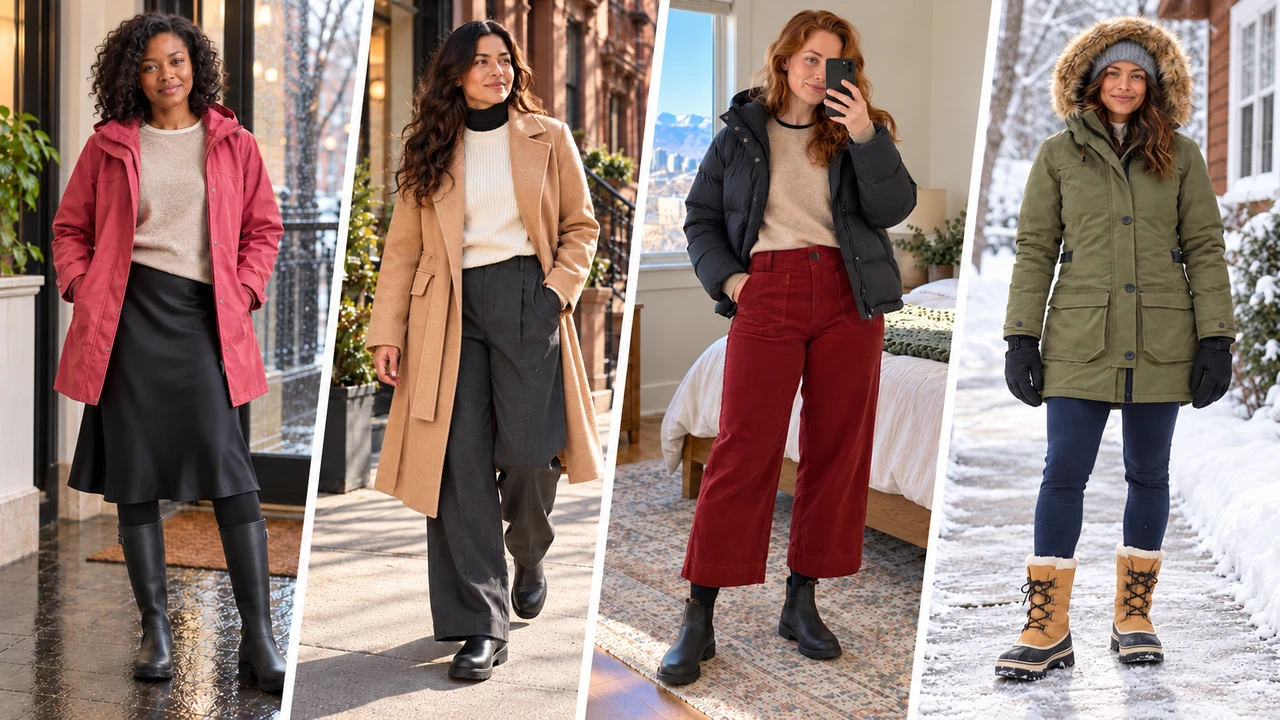
That doesn’t mean repeating the same trousers all season. These eight combinations move through denim, a silk midi skirt, tailored wool-blend trousers, brick corduroys, a knit dress, bootcut ponte pants, fleece leggings, and insulated snow bibs. Choose the weather category first, then the silhouette that suits your plans.
How to layer winter outfits without crowding your clothes
Start with a thin, comfortable base that sits smoothly under your next layer. Add a sweater or cardigan when you need insulation, then check that your coat closes without pulling across your shoulders or compressing everything underneath. REI’s layering guide explains the different roles of a base, insulating layer, and protective shell; a rain shell alone isn’t a winter warming layer.
Try sitting, reaching forward, and bending your elbows before leaving home. If the sleeves feel packed, change the thickness of the knit or choose outerwear with more room. Keep thick sweater hems out of a snug waistband, and let one substantial texture lead the outfit. The aim is comfortable proportions, not removing insulation you need.
Wind, precipitation, time outside, and your own comfort all affect what works. The rain looks below are for above-freezing days with short outdoor stretches; the dry-day outfits assume ordinary trips between heated spaces. The snow section adds insulated, protective outerwear. There is no single temperature at which every reader will find the same outfit warm enough.
Rainy winter days
Build around waterproof outerwear and appropriate footwear, then add warmth underneath. A covered doorway is a useful place to adjust your layers; close the coat and use its hood before stepping into rain. For more wet-weather combinations, browse these rainy day outfits for women.
1. A blue rain shell with dark straight jeans
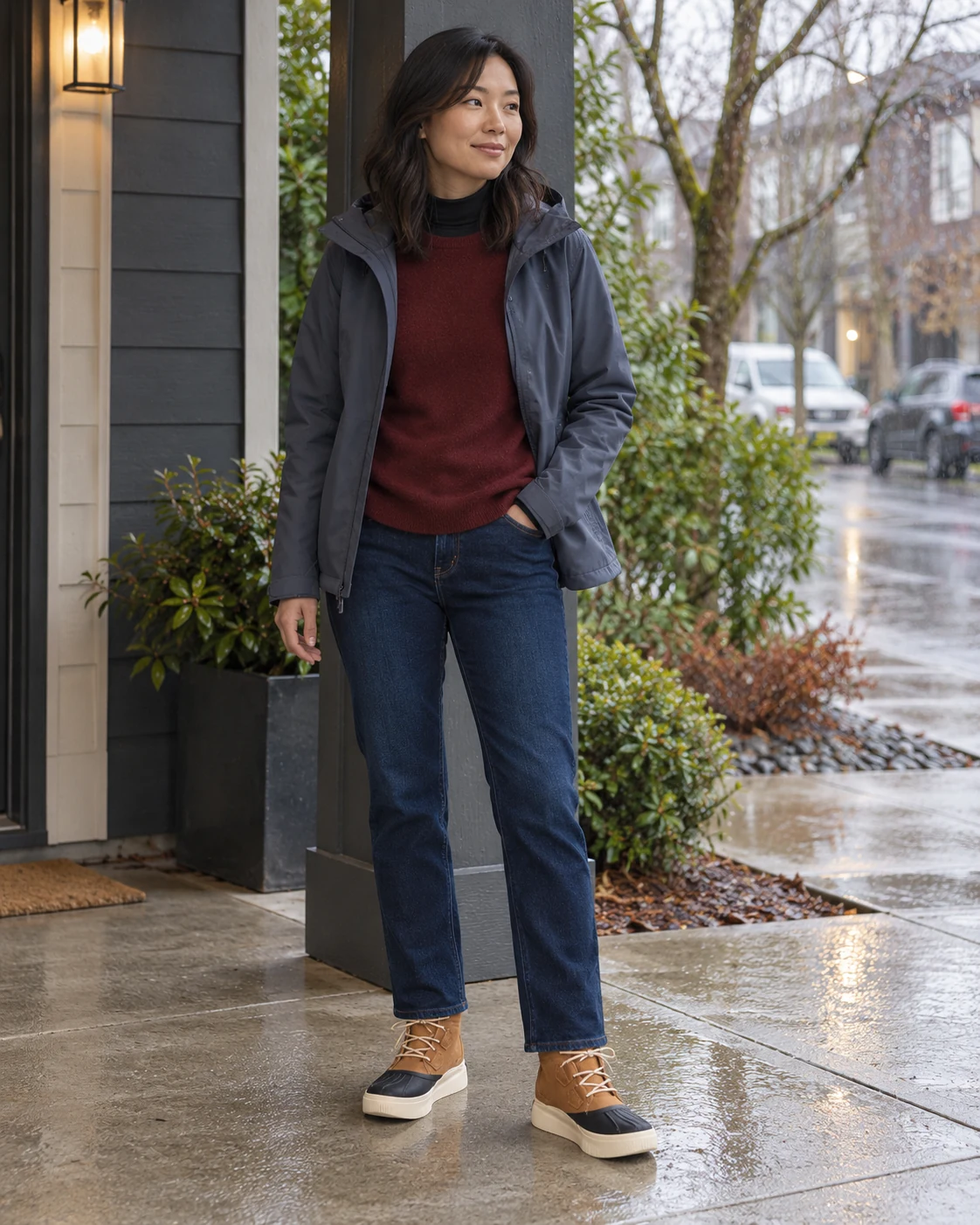
Dark straight jeans make a practical starting point for a quick coffee run or a short walk from the car. Add a thin black turtleneck, a fine burgundy crewneck, and a roomy blue-gray rain shell. The small strip of black at the neckline separates the two darker colors, while tan lace-up rain boots keep the combination from feeling heavy from head to toe. Leave the sweater untucked if the waistband feels crowded.
The Patagonia Torrentshell 3L provides waterproof shell protection; the sweater supplies the insulating layer. The selected SOREL Out N About IV Classic boots are waterproof but aren’t the insulated snow boots used later. Jeans can become wet below the shell, so save this for brief, above-freezing outings rather than prolonged rain. Keep the hems clear of puddles.
2. A rose raincoat over a black midi skirt
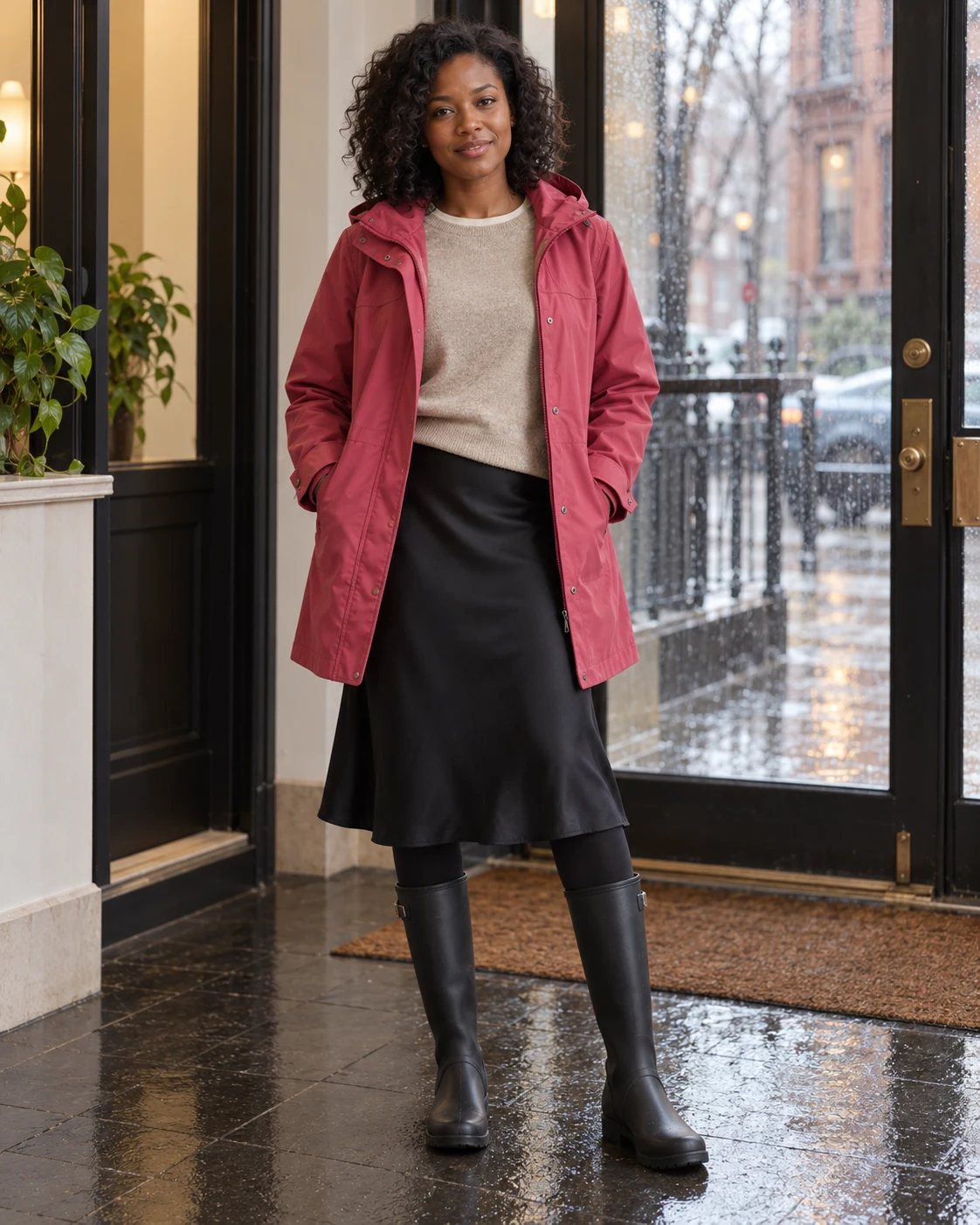
A silk midi skirt can still have a place in winter when most of the day happens indoors. Wear it over opaque thermal leggings, with a thin ivory base and an oatmeal crewneck above. A rose raincoat adds the color; tall black rubber boots repeat the skirt’s dark tone without leaving bare calves. Let the skirt hang freely instead of trapping a thick sweater hem underneath its waistband.
The referenced L.L.Bean H2OFF raincoat has a waterproof shell and a PrimaLoft-lined option, giving this look a different construction from the separate shell-and-knit combination above. The skirt remains exposed below the coat, and the tall rubber boots aren’t insulated snow boots. Choose this for a sheltered lunch or brief transfers on a rainy day above freezing. Switch to protective pants for sustained exposure.
Cold winter days without rain or snow
Dry conditions open up more textures: corduroy, knitwear, tailored trousers, and leather footwear. Keep a suitable coat ready for every outdoor stretch, even when the photograph shows the layers you wear at home. These fall and winter outfits for women offer more ideas for changing seasons.
3. Charcoal wide-leg trousers with a camel coat
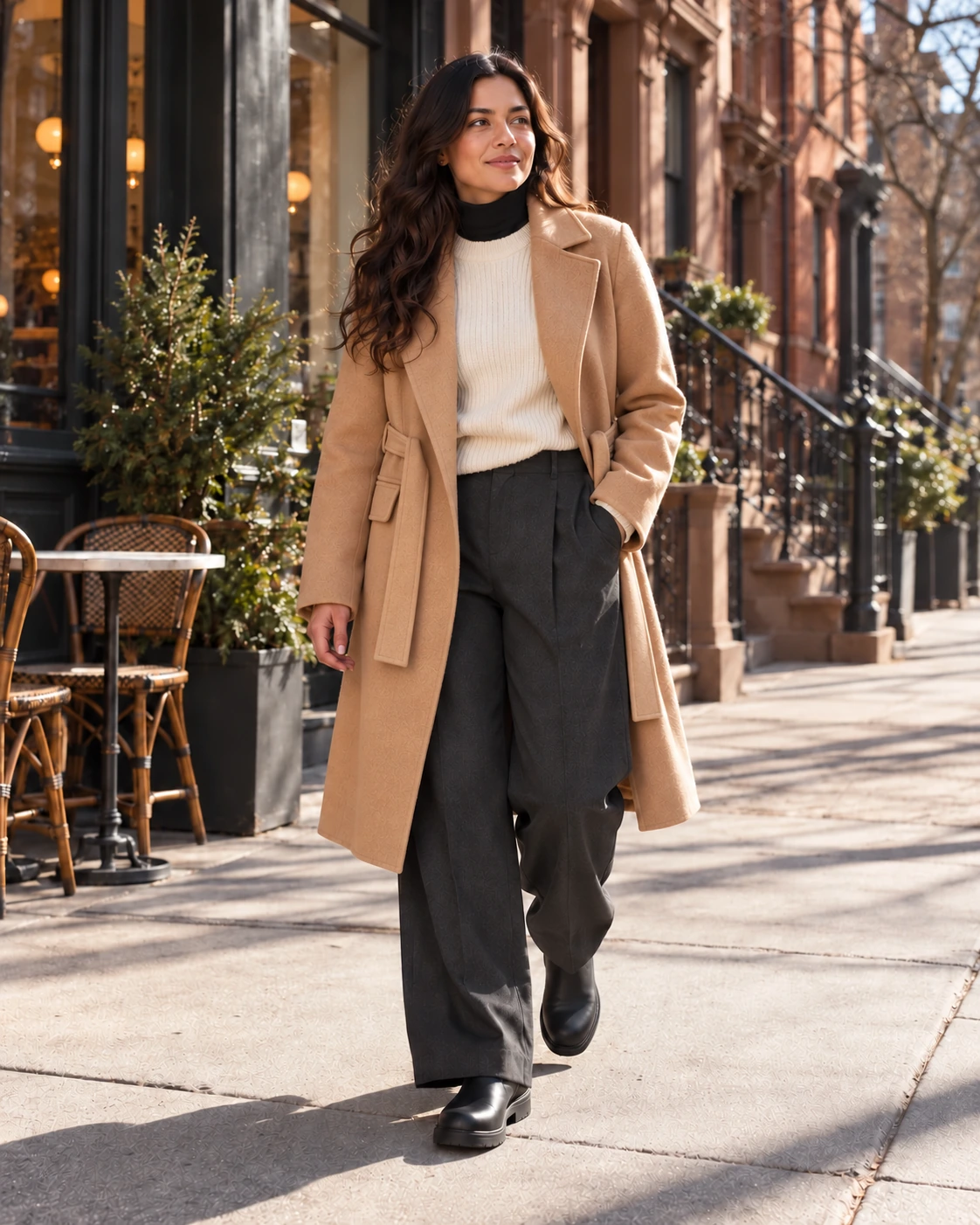
For a polished daytime outfit, start with pleated charcoal wool-blend trousers and an ivory fisherman sweater. A thin black turtleneck underneath gives the pale knit a defined neckline. The camel wrap coat should have enough shoulder and sleeve room to accommodate the sweater; leave its own belt untied so the front can sit naturally. Black Chelsea boots give the wider trouser hem a sturdy finish.
Check the length with your actual boots on: the hems should clear the pavement rather than gather underfoot. Our guide to shoes for wide-leg pants has more proportion ideas. The referenced COS trousers are a relatively lightweight wool blend, so don’t judge warmth from the word “wool” alone. Add a smooth thermal layer beneath them if needed, provided the seat and waistband still feel comfortable. Keep this coat-and-leather-boot combination for dry conditions.
4. Brick corduroys with a short black puffer
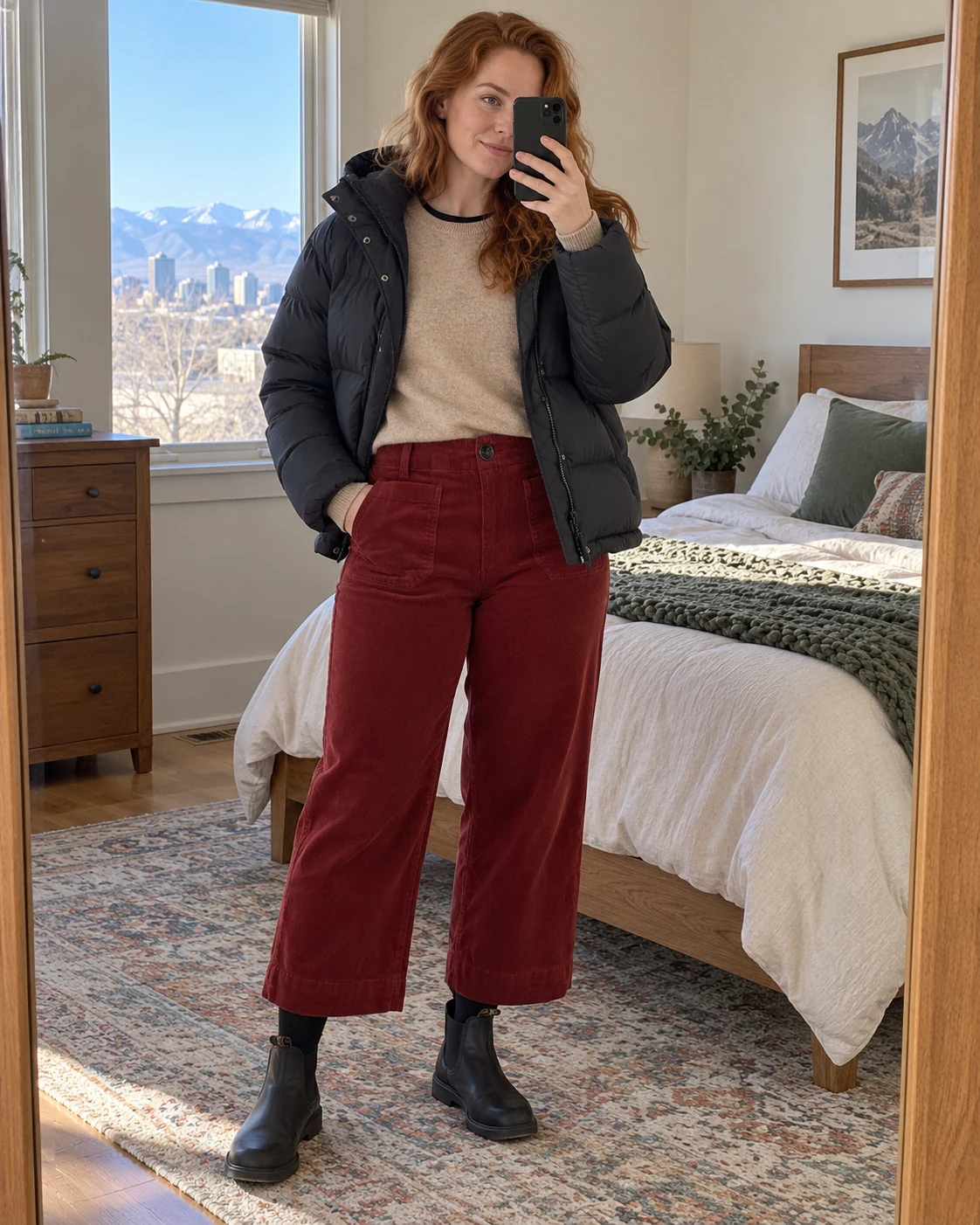
Corduroy gives a casual winter outfit texture without requiring another visible layer. Pair cropped, wide-leg brick-red pants with a fine oatmeal crewneck and a short black hooded puffer. The shorter jacket leaves the corduroys’ shape visible, while the quieter knit keeps the ribbed fabric and quilting from competing. A small front tuck works if it stays smooth; there is no need to force the whole sweater into the waistband.
Cover the gap above black Chelsea boots with black thermal leggings underneath the cropped hem. Try the pants over that layer before committing, since a comfortable fit alone can become tight when doubled up. This is a dry-day errands combination: the selected puffer and Chelsea boots aren’t presented as a waterproof snow system. Close the jacket outside and add the protection your local conditions require.
5. A brown knit dress with tall black boots
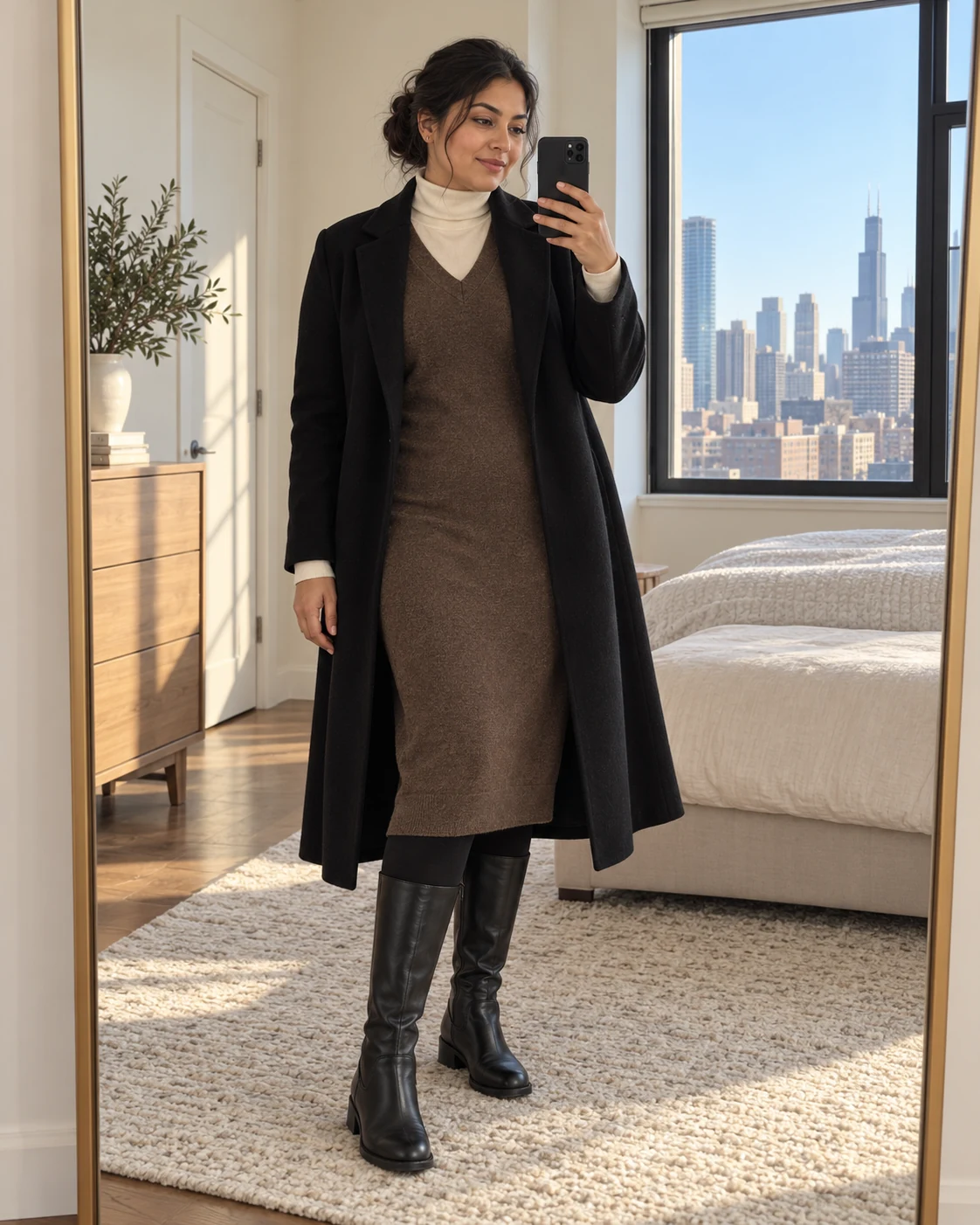
Give trousers the evening off with a brown V-neck sweater dress over a thin ivory turtleneck. The visible neckline makes the layering intentional, and the smooth base avoids bunching at the sleeves. Add opaque black leggings, knee-high black boots, and a black wrap coat with enough room through the arms. Let the dress fall naturally; pulling it tight beneath a belt can make the knit gather above and below the waist.
This outfit suits dinner plans with short transfers on a cold, dry evening. The referenced leather boots have a low block heel, but they aren’t snow footwear, and a heel doesn’t become suitable for ice because it is low. For more evening variations, see these winter going-out outfits. Close the coat before leaving the apartment; the open mirror view simply shows how the layers fit together.
6. Bootcut ponte pants with a striped shirt and cardigan

On a day spent working in a heated room, a removable cardigan is more useful than piling a heavy sweater over everything. Tuck a light blue striped poplin shirt smoothly into black bootcut ponte pants, then add a navy cable cardigan. Let the shirt collar and a little cuff show. Merlot ankle boots introduce a quieter accent than a bright accessory and give this outfit its own shape and mood.
Keep the trouser hem above the floor and check that it doesn’t catch under the small heel. If the shirt bunches at your back, loosen and redistribute the tuck before adding another layer. This is the indoor outfit for a cool, dry San Francisco workday; add weather-appropriate outerwear when leaving home. The cardigan is an adjustable middle layer, and the leather kitten-heel boots belong on dry surfaces.
Snowy winter days
Snow calls for a change in construction as well as styling. Insulated waterproof outerwear, suitable boots, and covered hands matter more than keeping a coat visually narrow. A warm parka will have volume. Make the layers underneath comfortable and functional, and keep outerwear fastened while outside.
7. A green parka with navy fleece leggings
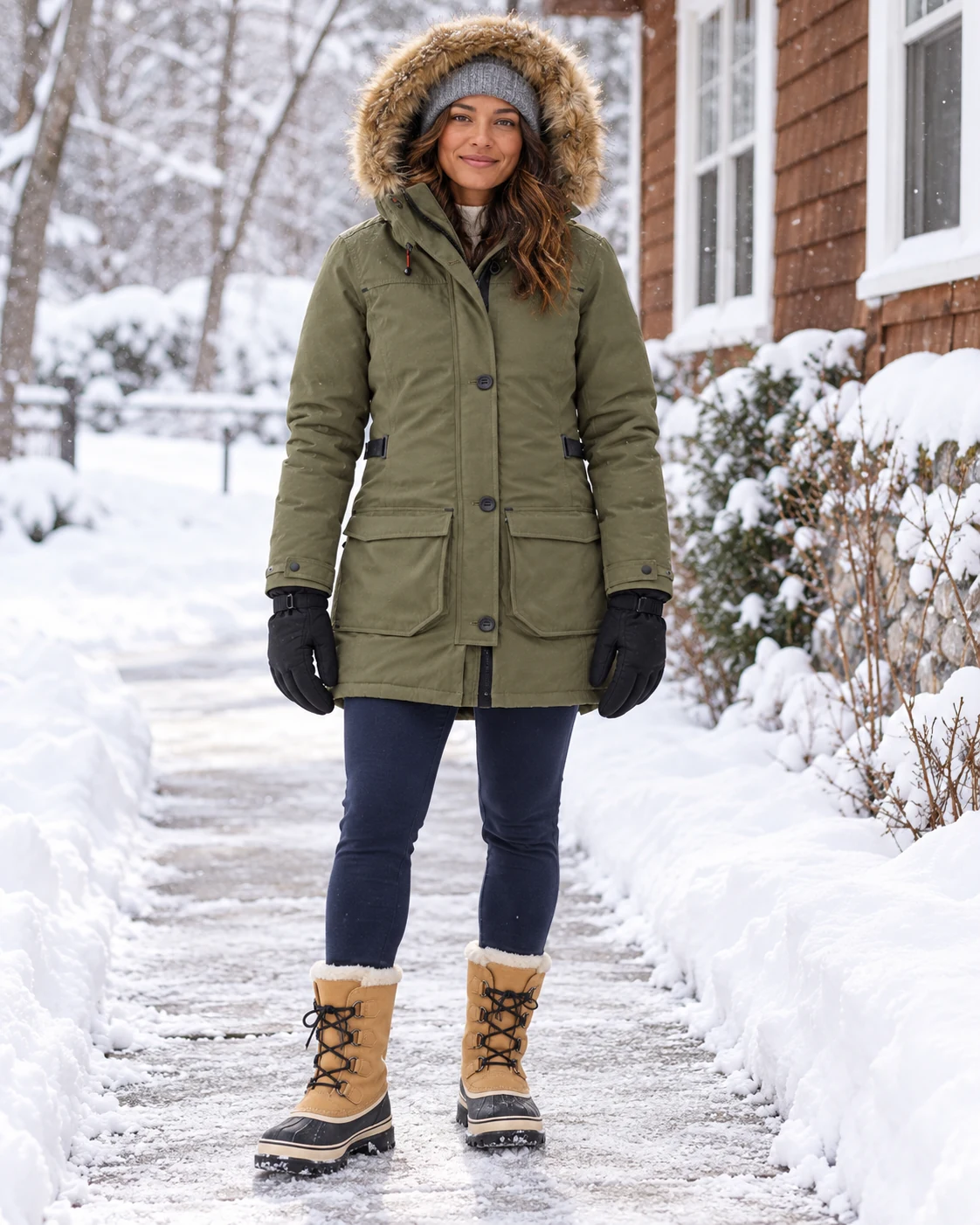
For a brief neighborhood outing on a cleared path during light snowfall, combine navy fleece-lined leggings with a thin base and an ivory sweater beneath a green insulated parka. A gray cuffed beanie fits inside the hood, black insulated gloves cover the hands, and tan snow boots add a useful break from the darker clothing. The simple leggings keep the lower half visually quiet beside the substantial coat.
The referenced L.L.Bean Maine Mountain Parka combines a waterproof shell with down insulation. The SOREL Caribou boots use a waterproof lower construction and an insulating liner. Neither description guarantees grip on ice. These fleece leggings aren’t waterproof, so this is a short, sheltered outing with easy access indoors—not the choice for kneeling in snow, deep drifts, or extended wet exposure. Choose the bib outfit below when more leg protection is needed.
8. A plum snow jacket with insulated blue bibs
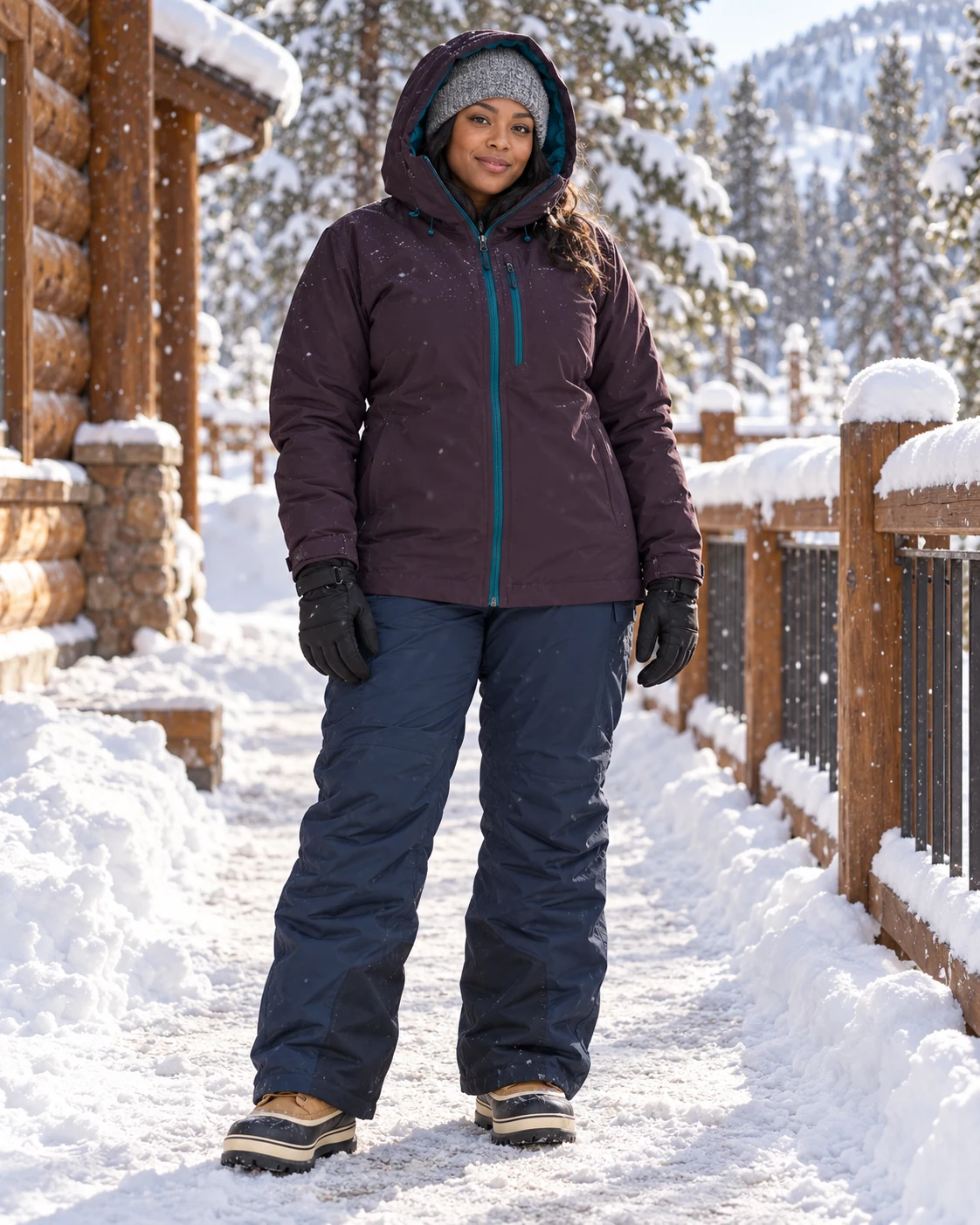
When the plan involves more time outside in falling snow, build around insulated bib pants. Wear a thin base underneath and a fine burgundy crewneck above, then close the plum insulated snow jacket over the bib straps. A gray beanie, black insulated gloves, and tan lined snow boots complete the combination. Keep the bib legs over the boot shafts, using the internal gaiters as designed to help limit snow entry.
The referenced REI Co-op Powderbound insulated bibs add waterproof protection and insulation around the legs; the insulated Patagonia Powder Town jacket covers the upper body. Leave enough room to bend your knees and reach forward without pulling at the shoulders. Avoid stuffing thick sweater folds beneath the bib waist. This is an everyday snow outfit, not a backcountry equipment list, and the amount of insulation still needs to match the conditions and your activity.
Choose tomorrow’s outfit by checking the forecast and your time outside first. Once the protective layers are right, changing the cut, texture, and color is the enjoyable part.
17 Comments